

Neither memes nor AI: Privacy coins are outperforming the crypto market
Privacy-focused cryptocurrencies are outperforming the broader crypto market. With crypto traders’ trust in the government currently low, the privacy sector has seen a surge in investor interest that is likely to keep building.
Investors generally view privacy-focused assets as a hedge against growing surveillance concerns, expanding Artificial Intelligence (AI) driven data tracking and tighter exchange regulations.
With analysts speculating that if stablecoin and Know Your Customer (KYC) rules continue to tighten globally, decentralized privacy networks could see renewed real-world demand in the upcoming years.
Best-performing sector in the digital space
Despite the broader cryptocurrency market remaining under pressure for more than a year, privacy-focused cryptocurrencies have emerged as the best-performing assets in the risky asset space.

Artemis terminal data shows that the privacy coin sector has delivered returns of more than 150% in a year, outperforming major cryptocurrencies such as Bitcoin (BTC), which declined 28%, and Ethereum (ETH), which fell 16% during the same period.
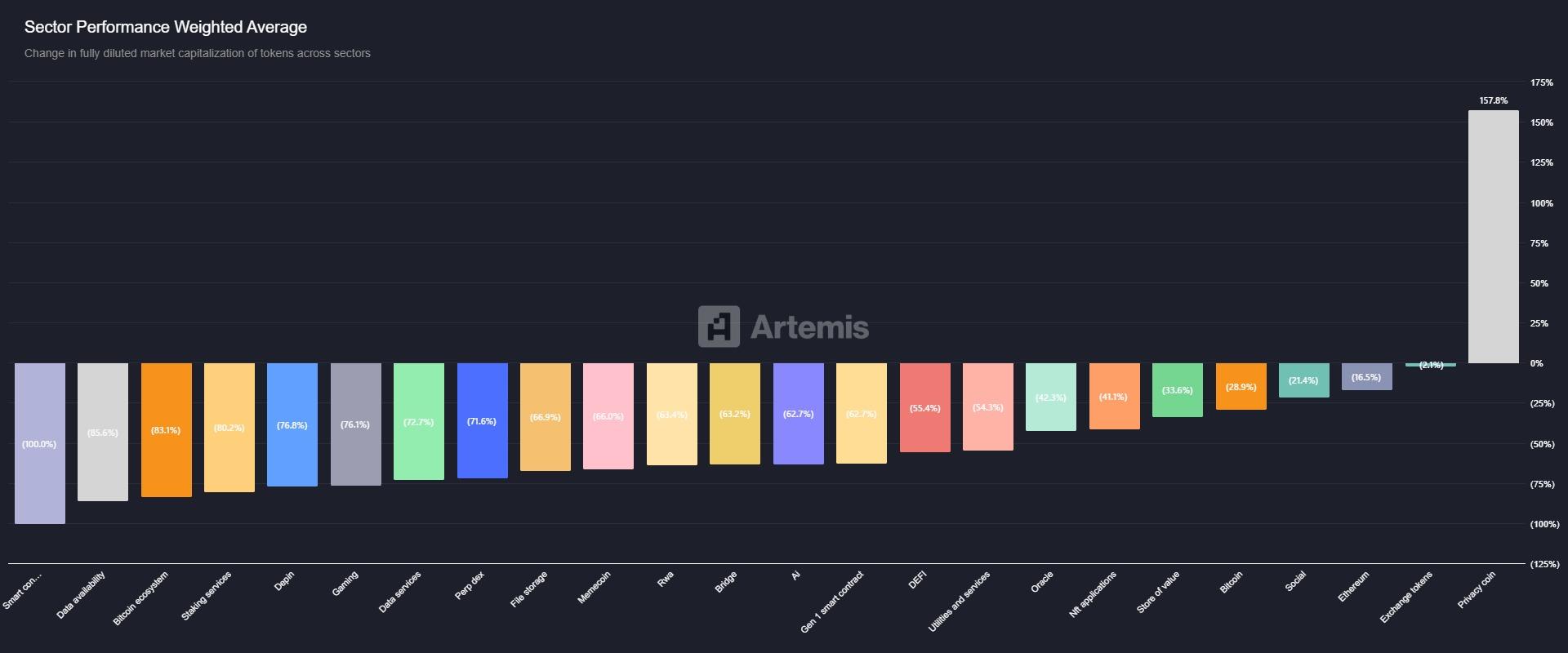
Zcash (ZEC) has emerged as the best performer, delivering a 14 times return over the past year. Dash (DASH) followed ZEC’s footsteps with gains of over 99%, while Monero (XMR) saw a much more muted increase of just 1.4%.

Privacy coins: The new golden child for traders
Strong returns highlight the growing investor interest in the privacy-focused sector. Traders and investors are increasingly turning to privacy coins for the financial anonymity, enhanced security and potential hedging advantages they offer in an increasingly monitored and highly regulated digital environment.
Unlike traditional and transparent blockchains such as BTC and ETH, privacy-focused cryptocurrencies use advanced cryptographic techniques to obscure wallet addresses, transaction participants and transferred amounts. This layer of confidentiality creates what many market participants call a “privacy premium,” making these assets particularly attractive to users seeking greater control over their financial data.
Growing regulatory frameworks and policies in many jurisdictions, such as the European Union’s MiCA (Markets in Crypto-Assets), which covers transparency, disclosure, authorization and supervision of transactions in the European countries, and the Directive on Administrative Cooperation (DAC8), which provides for automatic exchange of information on crypto-assets between EU countries, have boosted and drawn more attention toward the privacy coins.
In addition, the growing discussions around the US Digital Asset Market Clarity Act (CLARITY) have further increased retail concerns about transaction monitoring and reporting requirements.
Apart from the increased regulatory scrutiny, many investors are seeking protection against financial surveillance and data exposure, preferring to keep their transaction histories private.
Privacy coins also offer stronger resistance to censorship, account restrictions and asset freezing, features that have become increasingly valuable as governments expand sanctions regimes, tax reporting obligations and compliance requirements across the digital asset industry.
Will the uptrend fade or continue gaining momentum?
Privacy coins are likely to continue gaining momentum in the medium term (into 2026 and beyond), though volatility and regulatory headwinds will persist.
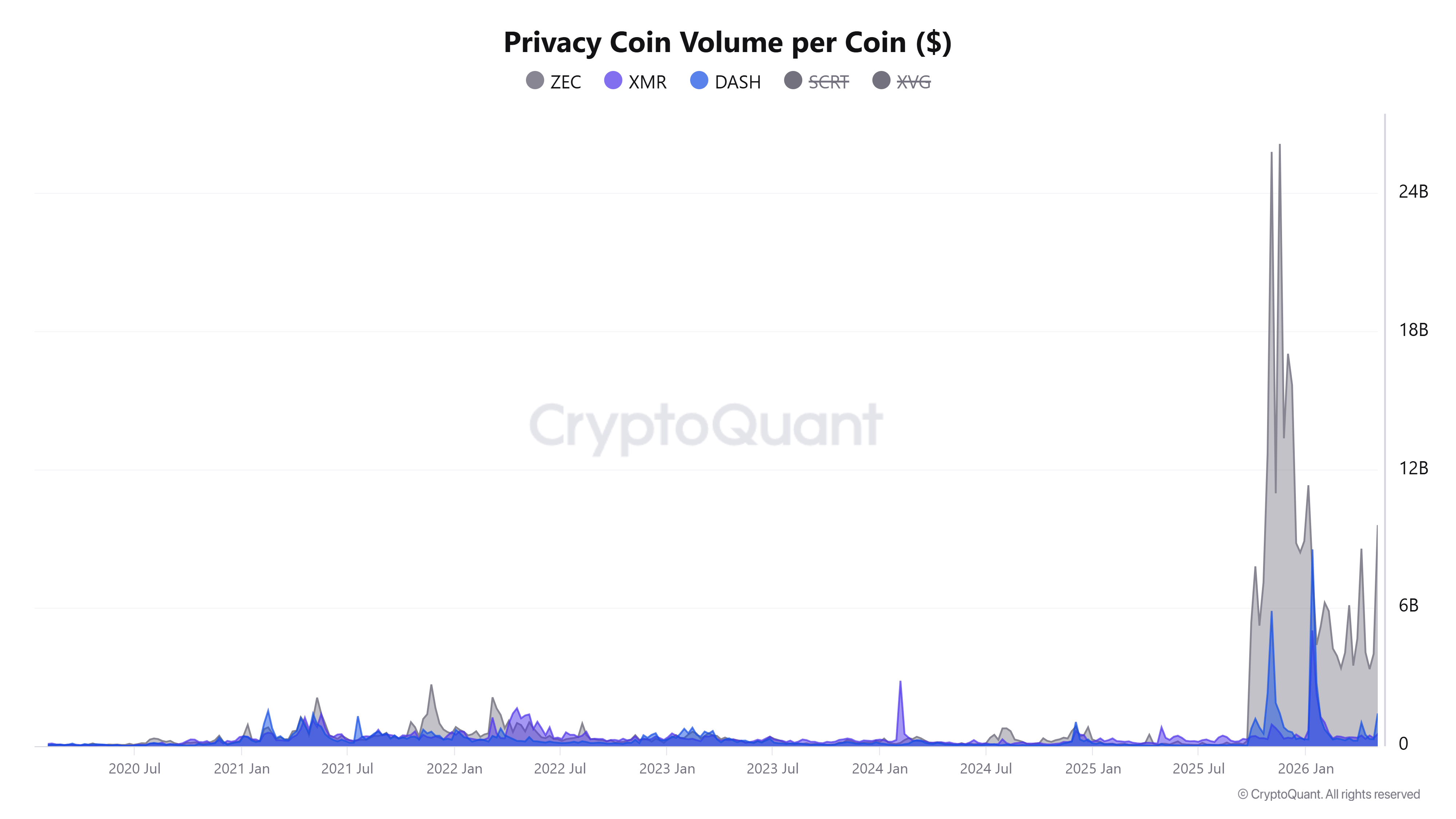
On-chain data from CryptoQuant also shows that the privacy coin sector is reawakening after years of relatively muted activity. Trading volumes and market participation have increased sharply in recent months, indicating that investors and traders are positioning for stronger demand in privacy-focused digital assets, as seen in the chart below.
The sector’s demand could further strengthen as government regulations and surveillance frameworks continue to tighten in the crypto space. Moreover, exchanges such as Coinbase have increasingly integrated AI into their compliance and monitoring systems to strengthen their transaction oversight and regulatory enforcement.
These developments further build the narrative of privacy-focused cryptocurrency, as investors move toward financial confidentiality and resistance to transaction tracking and surveillance.
On the technological development side, advancements in zero-knowledge (ZK) proofs, confidential computing and privacy-preserving blockchain infrastructure continue to build a robust network and innovation for this sector.
Short-term corrections are of course possible, but the sector’s long-term structural drivers, including growing concerns over surveillance, data privacy and censorship resistance, suggest privacy-focused assets could remain resilient and potentially expand further. The privacy coin narrative may have more room to run.
Cryptocurrency prices FAQs
Token launches influence demand and adoption among market participants. Listings on crypto exchanges deepen the liquidity for an asset and add new participants to an asset’s network. This is typically bullish for a digital asset.
A hack is an event in which an attacker captures a large volume of the asset from a DeFi bridge or hot wallet of an exchange or any other crypto platform via exploits, bugs or other methods. The exploiter then transfers these tokens out of the exchange platforms to ultimately sell or swap the assets for other cryptocurrencies or stablecoins. Such events often involve an en masse panic triggering a sell-off in the affected assets.
Macroeconomic events like the US Federal Reserve’s decision on interest rates influence crypto assets mainly through the direct impact they have on the US Dollar. An increase in interest rate typically negatively influences Bitcoin and altcoin prices, and vice versa. If the US Dollar index declines, risk assets and associated leverage for trading gets cheaper, in turn driving crypto prices higher.
Halvings are typically considered bullish events as they slash the block reward in half for miners, constricting the supply of the asset. At consistent demand if the supply reduces, the asset’s price climbs.














