

Trading
Explore a wide range of markets with competitive pricing, deep liquidity, and advanced trading tools.
Learn More 
Platform
Trade seamlessly with TMGM's powerful platform, built for speed, precision, and a superior trading experience.
Learn More Trading Platform
Academy
Learn the fundamentals of trading with beginner-friendly resources, including guides, webinars, and market insights.
Learn More News & Analysis
Get real-time market updates and expert analysis to stay ahead of trading opportunities
Learn More News & Analysis
About
Learn what sets TMGM apart — our global presence, regulatory strength, and commitment to innovation in trading.
Learn More Why Choose TMGM
Sponsorship
Firmer Oil supports Canadian Dollar as traders await inflation data
- Firmer Oil prices lend support to the Canadian Dollar, pulling USD/CAD back from its recent highs.
- USD/CAD's losses remain limited as expectations of a Fed rate hike hold the US Dollar close to a 19-month high.
- The BoC's December rate decision is in focus as traders look to Canadian CPI data for guidance.
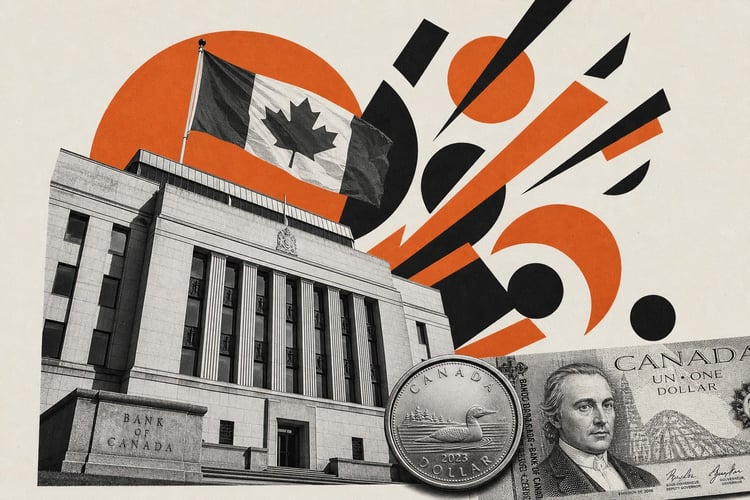
The Canadian Dollar (CAD) outperforms its major peers on Friday, supported by recovering Oil prices, while USD/CAD breaks a three-day winning streak. However, broad US Dollar (USD) strength limits the pair’s losses as expectations for Federal Reserve (Fed) policy turn increasingly hawkish.
A second consecutive weekly gain remains in sight for USD/CAD, which is trading around 1.4248 at the time of writing, close to a one-month high. Meanwhile, the US Dollar Index (DXY) stands near 103.33, a 19-month high. The index measures the Greenback against six major currencies.
The Canadian Dollar’s sensitivity to Oil price movements reflects Canada’s position as a major crude exporter. Oil has rebounded from recent lows following US President Donald Trump’s remarks on Thursday that Washington did not need an agreement with Iran to end the war.
The risk of persistently high inflation across major economies has increased with the rise in energy prices. At its October meeting, the Bank of Canada (BoC) lifted its policy rate by 25 basis points (bps) to 2.50%. Explaining the move, the Governing Council said it was necessary “to reduce the risk that continuing high energy prices spread broadly to the prices of other goods and services.” Attention now turns to Monday’s Canadian Consumer Price Index (CPI) release for further indications of whether the BoC will deliver another rate increase in December.
Further policy tightening is anticipated by economists at RBC Economics, who note that the BoC "is expected to hike three more times." Their forecast calls for "another 25-basis-point increase in December and two additional hikes by mid-2027, bringing the overnight rate to 3.25%, provided the economy continues to improve."
Markets showed little response to US Producer Price Index (PPI) figures published earlier in the day. October’s headline PPI increased 0.3% MoM, slowing from 1.4% in September and falling short of the 0.4% forecast. On an annual basis, producer inflation accelerated from 6.3% to 6.5%, marginally below expectations of 6.6%. Core PPI matched forecasts, rising 0.3% MoM and 5.0% YoY.
A December rate increase of 25 bps is fully priced in by traders, according to the CME FedWatch Tool, while the probability of a larger 50 bps rise stands at 10%. Market expectations also point to a further increase in January.
Inflation will dictate the course of interest rates, Chicago Fed President Austan Goolsbee said on Friday, adding that the Fed still “has work to do.” His comments followed a call earlier this week from Dallas Fed President Lorie Logan for “at least two more 25-basis-point rate increases.”
POPULAR ARTICLES
1Why does ECB’s Nagel see another hike as second-round risks build?2Rising US yields and Fed tightening outlook push Australian Dollar lower3Fed's Collins backs cautious rate hikes amid warning of broadening inflation4Is the British Pound heading for weekly losses as US PPI keeps Fed hawks in control?5Firmer Oil supports Canadian Dollar as traders await inflation data6Bitcoin vs Gold Outlook: BTC Downtrend Accelerates, XAU Recoups Some Losses as US PPI Climbs7Why Does the Euro Remain Under Pressure Despite Softer US PPI?8As inflation spreads, is the Fed set for more aggressive hikes? Goolsbee warns9Bitcoin Weekly Forecast: Why Are Sellers Pushing BTC Below $68,000 Despite an Oversold Signal?


Get Started!
Sign up and access the Global Markets in less than 3 minutes

Connect With Us












The information provided on this website is of a general nature only and does not constitute personal financial advice. Before acting on any information on this website, you should consider the suitability of the information in relation to your objectives, financial situation and needs. Investing in CFDs and FX Margin Contracts carries significant risks and is not suitable for all investors. You may lose more than your initial deposit. You do not own, or have, any interest in the underlying asset. We recommend that you seek independent advice and ensure you fully understand the risks involved before trading. It is important that you read and consider the disclosure document before you acquire any product listed on the website. The information and advertisements offered on this website are not intended for use by any person in any country or jurisdiction where such use would be contrary to local laws and regulations. The Products and Services offered on this website are not intended for residents of the United States, Malaysia and Thailand.
TMGM is authorized and regulated in various jurisdictions.
Trademax Australia Limited, trading as TMGM, is regulated by the Australian Securities and Investments Commission (ASIC), AFSL no. 436416 and is located at Level 28, One International Tower, 100 Barangaroo Avenue, 2000 Sydney, NSW Australia.
Email: support@tmgm.com.au
Trademax Global Limited, trading as TMGM, is authorized and regulated by the Vanuatu Financial Services Commission (VFSC), registration number 40356 and registered at 1276, Kumul Highway, Port Vila, Vanuatu, Republic of Vanuatu.
Email: support@tmgm.com
Trademax Global Markets (SE) Limited, trading as TMGM, is authorized and regulated by the Financial Services Authority (FSA) of Seychelles, with license number SD224. The company is registered at Office No 13, Providence Estate ABIS Centre, Mahe, Seychelles.
Email: support@tmgm.com
Trademax Global Markets (International) Pty Ltd, trading as TMGM, is authorized and regulated by the Financial Services Commission, Mauritius (FSC) with license no. GB22201012, and registered at 33, Edith Cavell Street C/o IQ EQ Fund Services (Mauritius) Ltd Port Louis, 11324 Mauritius.
Email: support@tmgm.com
Copyright © TMGM. All rights reserved