What is Crypto Day Trading?
Crypto day trading entails opening and closing positions within the same 24-hour period—, commonly known as intraday trading. This differentiates it from other trading styles such as spot trading, swing trading, or position trading, where trades are held for longer durations. Day traders usually operate on centralized exchanges, executing multiple trades rapidly—, sometimes twenty or more within a single day—, aiming to capitalize on small, short-term price movements.
It’’s important to understand that day trading is not a single strategy but a time-based trading methodology. Traders employ techniques such as scalping or utilize tools from technical analysis, but what defines a trade as a "day trade" is its timeframe——both entry and exit occur within the same trading day.
Here'’s how day trading compares to other prevalent trading styles:
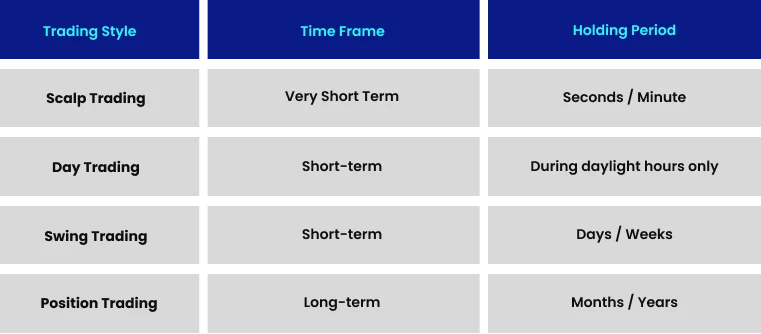
Figure 1: Illustrates day trading versus alternative trading methodologies
Cryptocurrency markets operate continuously, unlike traditional stock markets that have regional sessions and weekend closures. Therefore, a crypto day trade is any position opened and closed within 24 hours. Many traders use Coordinated Universal Time (UTC) as the standard reference for the start and end of the trading day.
How to Select Cryptocurrencies for Day Trading
Choosing cryptocurrency assets for day trading should be deliberate. Successful day traders generally focus on assets that meet specific criteria:
Comprehensive Knowledge: Select cryptocurrencies you have thoroughly researched over a significant timeframe, including backtesting your strategies to assess their effectiveness within your trading framework.
Alignment with Personality and Trading Plan: Opt for assets that fit your trading personality and plan. Some cryptocurrencies exhibit high volatility and substantial trading volume, while others trend more slowly over extended periods. Your choice should align with your risk tolerance and trading style.
Platform Compatibility: Confirm that your selected cryptocurrencies are supported by your preferred trading platform and possess sufficient liquidity for your intended trade sizes.
Top day traders often develop deep expertise in a limited set of cryptocurrency pairs rather than dispersing focus across numerous assets. This concentrated approach facilitates a nuanced understanding of specific market dynamics.
Crypto Day Trading Example: Step-by-Step Process
To demonstrate how crypto day trading operates in practice, consider the following scenario:
After analyzing various cryptocurrency markets for potential setups, a trader identifies a promising opportunity on the five-minute Bitcoin price chart. Bitcoin is currently in a downtrend approaching the psychologically significant $50,000 support level.
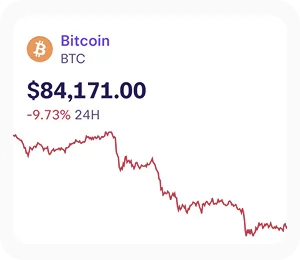
Figure 2: Five-minute Bitcoin chart illustrating the downtrend nearing the $50,000 psychological support level.
The trader formulates a trade idea with historically favorable expectations based on extensive backtesting, statistical analysis, and trading journal insights. Their analysis indicates a high probability that Bitcoin prices will rebound upon reaching the $50,000 level.
The trader decides to:
Place a limit order to buy one Bitcoin at $50,000
Set a stop-loss order at $49,900 to limit potential losses if the price continues to decline
Place a take-profit order at $50,200
After calculating potential profit and loss, the trader determines a risk-reward ratio of 2:1——the target profit ($200) is twice the potential loss ($100), excluding transaction costs.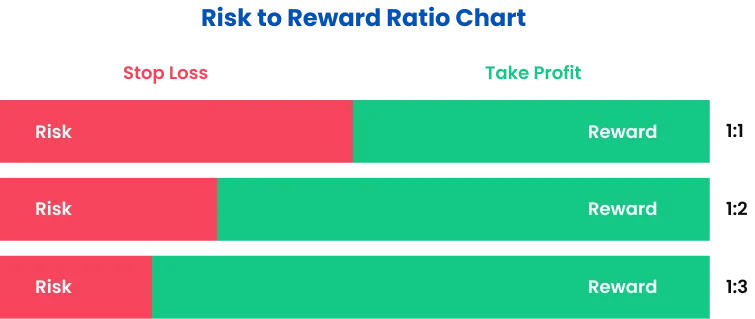
Figure 3: Visual depiction showing stop-loss, take-profit levels, and risk-reward ratio.
As expected, Bitcoin'’s price declines to $50,000, triggering the trader'’s limit buy order. However, contrary to expectations, the market continues to fall rather than rebound. When the price drops below $49,900, the stop-loss order activates, resulting in a $100 loss.
Despite the unfavorable outcome, the trader acknowledges that the plan was executed correctly and understands that losses are an inherent part of trading. Statistically, losses occur frequently, and individual losing trades do not negate the trader'’s "edge"——their ability to identify and exploit non-random market patterns.
Is Day Trading Crypto Appropriate for Beginners?
Most professional traders strongly discourage beginners from engaging in day trading, supported by substantial evidence:
The stark reality is that the vast majority of day traders incur losses, with commonly cited failure rates exceeding 95%. Research indicates the actual rate may be even higher.
Key findings from studies of day traders in traditional markets include:
80% of traders quit within their first two years
Over 90% of day traders ultimately lose their invested capital across multiple studies
One study found only 1% of day traders remain profitable after accounting for trading fees
Another study concluded that "it is virtually impossible for an individual to sustain a living solely from day trading, contrary to claims by brokerage representatives and course providers."
These statistics should give pause to anyone contemplating crypto day trading, especially novices with limited market experience and capital.
Why Is Crypto Day Trading Considered Challenging?
Several factors contribute to the exceptional difficulty of day trading cryptocurrencies, making it significantly more demanding than trading on higher timeframes or adopting long-term investment strategies:
Extreme Market Volatility: Cryptocurrency markets exhibit sharp price swings over short intervals, creating both opportunities and substantial risks.
Real-Time Decision Making: Day trading requires exceptional cognitive agility to make swift decisions under pressure——a skill many traders find difficult to develop consistently.
Fee Impact: The high frequency of trades in day trading results in elevated cumulative transaction costs, which can determine the difference between marginal profits and consistent losses.
Psychological Demands: Among all market participation methods, day trading imposes the greatest psychological strain. Successful day traders must be highly skilled at quickly accepting losses and moving forward without emotional burden——a psychological competency many novices struggle to master.
A critical question: Would you invest in a company without analyzing its profitability or expected return? If not, why approach day trading differently? Before risking capital, you should have evidence supporting your profitability potential under day trading conditions.
Achieving consistent profitability often requires years of persistence and discipline——as demonstrated by many successful traders featured in Jack Schwager'’s acclaimed "Market Wizards" series.
Essential Skills for Crypto Day Trading
While no single formula guarantees success in crypto day trading, the markets offer vast freedom and creativity——a dual-edged characteristic presenting both opportunities and risks.
In his influential book "Trading in the Zone," Mark Douglas explains that markets provide creative freedom rarely found elsewhere, enabling traders to take significant risks with potentially severe consequences.
This dynamic explains why traders may experience dramatic short-term gains and losses while struggling to preserve long-term profitability.
Many experienced traders assert that successful crypto day trading requires:
Self-awareness to develop strategies aligned with your personality
Mastery of trading fundamentals, including technical analysis, backtesting, and risk management
Let'’s explore these crucial skills in detail.
Chart Reading and Technical Indicators
While academics debate market randomness (see "Random Walk Theory"), many traders operate under the assumption that markets exhibit repeatable, tradable patterns.
Chart analysis offers myriad approaches, with thousands of indicators, algorithms, and strategies available. Experienced traders often analyze price action (price movement over time) using candlestick charts, which visually depict price changes within defined periods.
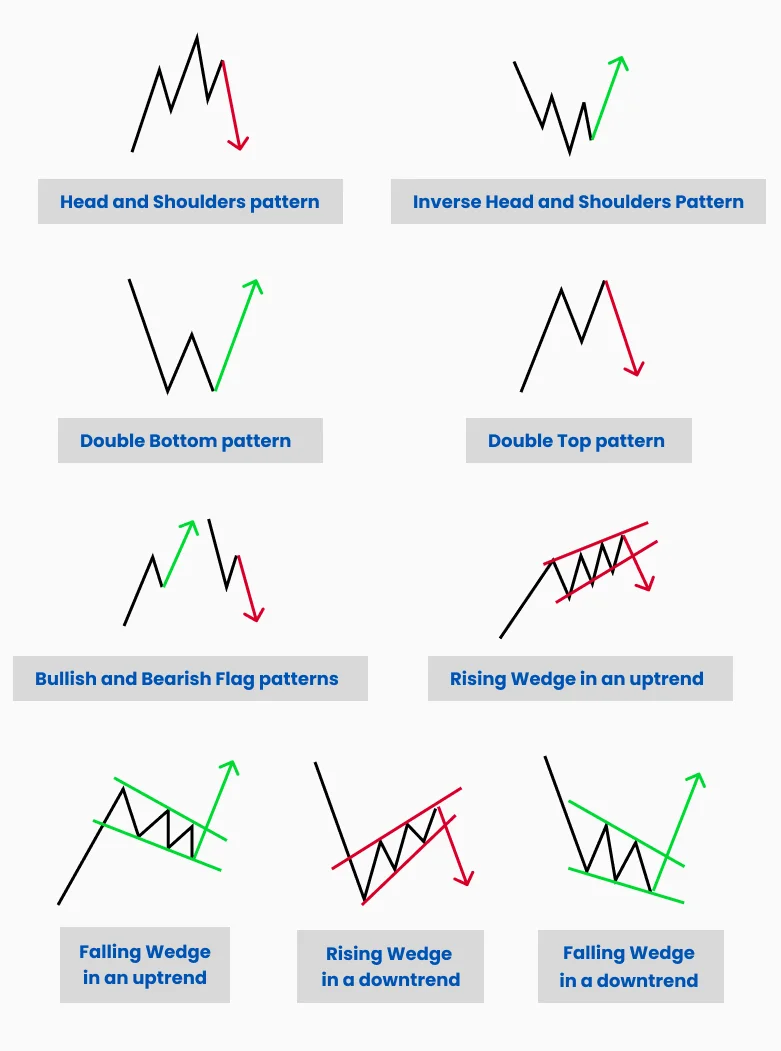
Figure 4: Common candlestick patterns used by day traders to identify potential market reversals and continuations.
Technical analysis aids traders in identifying trends and chart patterns in cryptocurrency markets, revealing broader market sentiment and supporting informed decision-making.
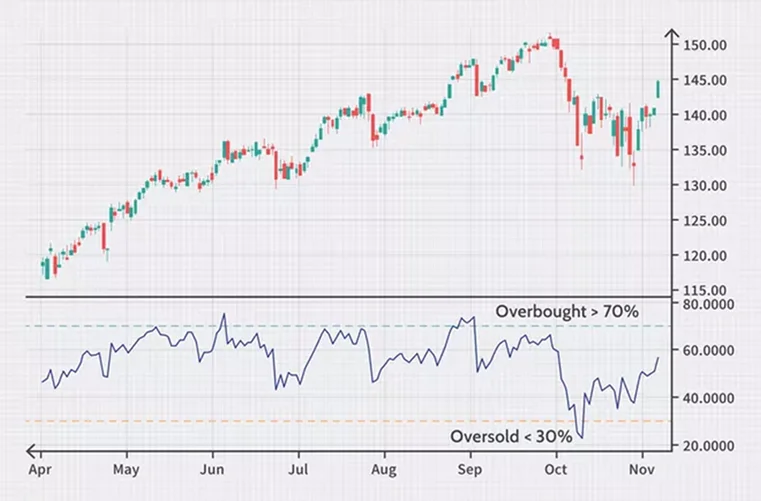
Figure 5: Example of technical analysis on a cryptocurrency chart, displaying moving averages, RSI, and volume indicators.
Selecting Appropriate Trading Timeframes
Crypto day traders typically focus on lower timeframes, such as hourly charts (capturing up to one hour of price action) or even 1-minute candlesticks. This enables them to exploit minor market fluctuations over short intervals.
Many traders also incorporate higher timeframe data, like daily or weekly charts, to contextualize their lower timeframe trades. For example, if Polygon (MATIC) or Ethereum (ETH) is trending upward on the daily chart, trades aligned with this trend on lower timeframes may have higher success probabilities.
Mastering Order Execution
Financial markets offer various order types, but crypto day traders primarily use two order categories on centralized exchanges:
Limit Orders: These passive or "resting" orders execute only at a specified price. For example, a trader might place a limit order to buy 1 Bitcoin at $50,000. This order fills only when Bitcoin reaches that price and a seller accepts the trade. Limit orders provide liquidity by making assets available for trading. The order book aggregates all limit orders for a given market.
Market Orders: These active orders "take" liquidity from the order book. For instance, if a trader wants to buy Bitcoin immediately around $50,000 without waiting for a specific price, they place a market order. The exchange fills this order using the closest available sell orders, which may result in a less favorable entry price——a phenomenon known as "slippage."
This explains why stop-loss orders (market orders triggered at predetermined price levels to exit positions) may execute at prices significantly different from intended levels or sometimes not at all. No exchange guarantees exit at your exact desired price.
Risk Management in Crypto Day Trading
Risk management——determining the capital amount to risk per trade to minimize the "risk of ruin" (the risk of losing all trading capital)——is arguably the most vital component of successful trading.
Risk of ruin refers to the probability of losing sufficient capital to make recovery impossible or force cessation of trading activities. In crypto communities, this catastrophic event is colloquially termed "getting rekt."
Numerous free online calculators enable traders to estimate their risk of ruin based on individual trading parameters.
To mitigate risk, many traders:
Set stop-loss orders on all trades to limit potential losses
Never risk more capital than they can afford to lose
Conduct comprehensive due diligence on all cryptocurrencies before committing funds
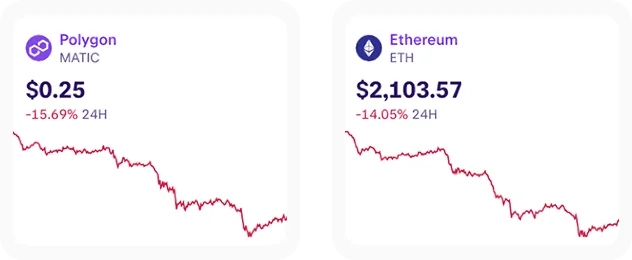
Figure 6: Technical analysis example on a cryptocurrency chart, showing moving averages, RSI, and volume indicators.
Top 5 Crypto Day Trading Strategies for Beginners
While applicable across timeframes, the following strategies are especially favored by day traders seeking short-term opportunities.
1. Range Trading Strategy
Markets generally exhibit two behaviors: trending (up or down) or rangebound (sideways). Strong trends often slow into ranges or consolidations.
Many traders specialize in trading these consolidations by entering near the range’s upper or lower boundaries—.
Cryptocurrency prices frequently "sweep" or "overshoot" range boundaries before reversing back inside. This occurs because traders are caught off-guard, holding losing positions after prices briefly exit the range. Many range traders target these deviations for entry.
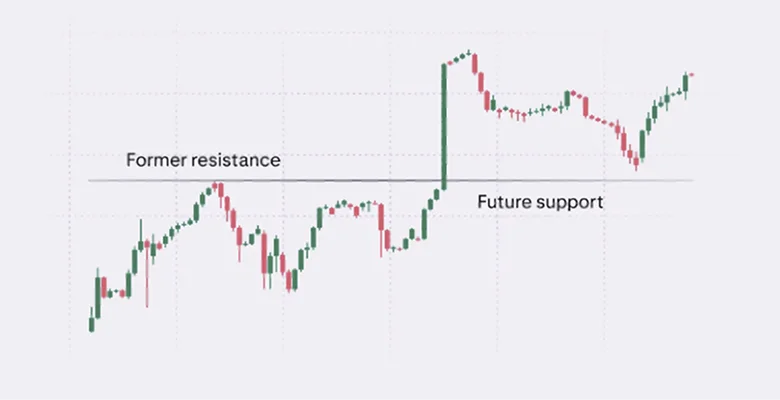
Figure 7: Range trading example showing price consolidation between support and resistance, with entries at range edges.
2. Fibonacci Retracement for Crypto Day Trading
Many crypto traders use the Fibonacci retracement tool (based on the Fibonacci sequence) to identify potential reversal zones on price charts. By marking significant highs and lows, traders overlay Fibonacci levels to highlight areas where price may reverse.
Common retracement levels include 23.6%, 38.2%, 61.8%, and 78.6%, with particular focus on the "golden ratio" at 61.8%.
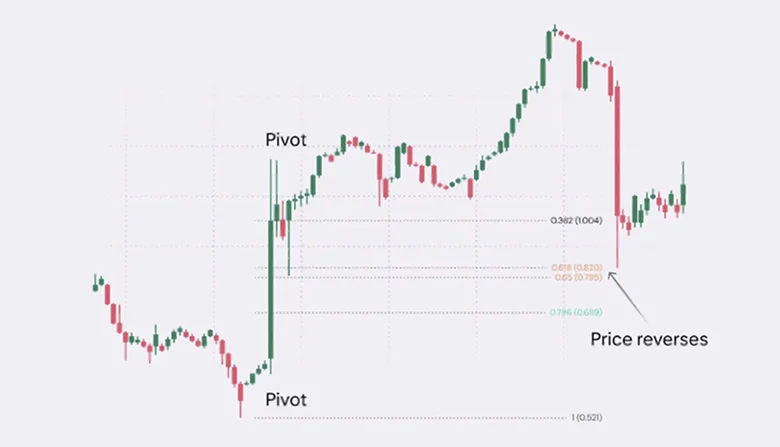
Figure 8: Fibonacci retracement levels on a Bitcoin chart, indicating potential reversal zones.
3. Arbitrage Opportunities in Crypto Markets
Crypto arbitrage exploits price discrepancies of the same asset across different exchanges. Unlike price-action strategies, arbitrage requires monitoring prices across multiple venues.
For example, if Solana (SOL) trades at $100 on Exchange A but $120 on Exchange B, a trader with funds on Exchange A could buy SOL, transfer it to Exchange B, and sell it there—, potentially profiting after fees.
Though conceptually straightforward, successful arbitrage requires overcoming challenges such as transfer delays, withdrawal limits, and rapidly changing price spreads.
4. Support and Resistance Flip Strategy
A common trading principle states that "former resistance becomes future support," meaning that once price breaks a key resistance level, that level often acts as support thereafter——until market sentiment shifts again.
This creates opportunities for day traders. Price often tests a level multiple times before breaking through. After a breakout, price frequently retests the former resistance as new support, producing a reversal. This pattern is called an "S/R Flip" due to the role reversal.
Many traders consider S/R flip zones among the highest-probability setups in crypto markets.
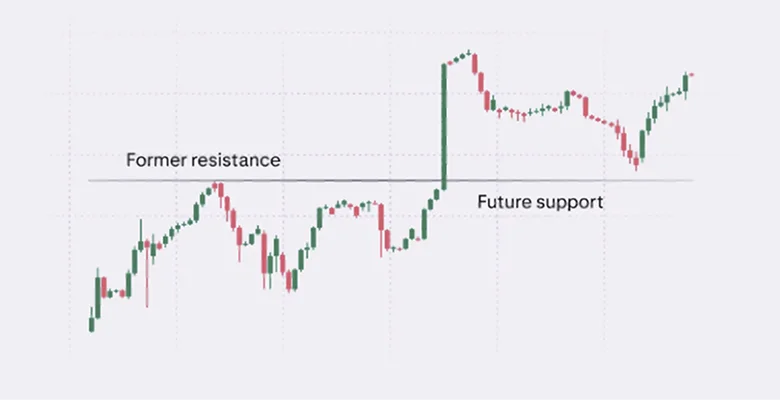
Figure 9: Support and resistance flip example on an Ethereum chart, showing previous resistance becoming support after breakout.
5. Trendline and Momentum-Based Trading
Trend trading strategies seek to capitalize on established directional moves, often capturing significant price portions. A common method uses trendlines and price action to define risk and reward for trade setups.
Trend traders often say "the trend is your friend," acknowledging that trading with the prevailing market direction generally offers higher probability opportunities than counter-trend trades.
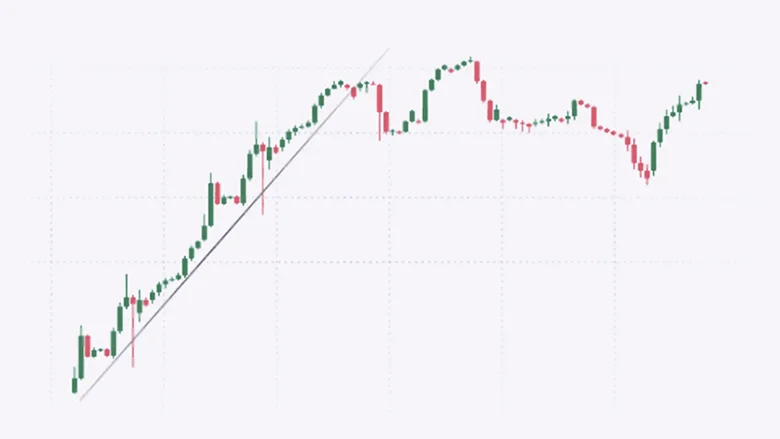
Figure 10: Trend trading example showing an uptrend in Bitcoin with multiple entries along the ascending trendline.
Advantages and Disadvantages of Crypto Day Trading
Advantages of Crypto Day Trading
Structured Schedule: Day trading allows traders to concentrate their activities during specific hours, akin to a conventional workday. This structure may appeal to those with family or other commitments.
Potential for Rapid Account Growth: Experienced day traders can grow accounts quickly through multiple daily trades. When combined with compounding, this high-frequency approach can yield exponential growth if executed effectively.
Disadvantages of Crypto Day Trading
Psychological Stress: Managing multiple trades within a single day can cause significant stress, leading to decision fatigue and burnout.
Mental and Physical Demands: Day trading requires sustained, intense focus on numerous variables (often across multiple screens), which can result in considerable mental and physical fatigue.
High Failure Rate: The difficulty of maintaining consistent profitability over time means many day traders incur losses. Such traders might achieve better outcomes through long-term investing or trading on higher timeframes.
Conclusion: Should You Begin Crypto Day Trading?
Crypto day trading is among the most demanding methods to generate profits from cryptocurrency markets, as reflected by extremely high failure rates in both traditional and digital asset markets.
Understanding the risks is crucial for those considering this style. Prior to committing significant capital, extensive practice on demo accounts can help determine if day trading suits your skills, personality, and financial goals.
While successful day trading offers substantial rewards, the path to consistent profitability is challenging and not suitable for everyone. Many accomplished crypto investors achieve strong results through longer-term strategies that require less time, reduce stress, and limit exposure to short-term volatility.
Whatever your chosen approach, remember that education, practice, and disciplined risk management are the cornerstones of a successful trading career.
Advancing Your Crypto Trading Journey
Figure 11: TMGM cryptocurrency trading interface displaying trading opportunities for five major pairs: BTC/USD, ETH/USD, BNB/USD, DOGE/USD, and DOT/USD.
Experience TMGM'’s advanced trading platform featuring comprehensive charting tools and real-time market data.
Access Bitcoin, Ethereum, and other leading cryptocurrencies via CFD trading with competitive spreads, leverage, and live market data. TMGM provides professional-grade trading conditions, advanced charting capabilities, and robust risk management tools to support your crypto trading strategies.
Open an account today and experience the TMGM advantage:
Award-winning trading platform
24/7 dedicated customer support
Educational resources for traders at all experience levels
Competitive spreads and low transaction fees