Key Takeaways
Trade during optimal hours and currency pairs. Concentrate on periods of peak liquidity, particularly the London-New York session overlap from 8 am to 12 pm EST. Prioritize highly liquid major pairs such as EUR/USD, GBP/USD, USD/JPY, and USD/CHF to benefit from tighter spreads.
Select timeframes with purpose. Utilize 1- to 5-minute charts for scalping and 5- to 15-minute charts for most intraday trades. Confirm directional bias on 30-minute to 1-hour charts.
Simple, repeatable setups. Maintain a concise strategy toolkit, such as 8 and 21 EMA crossovers, support and resistance bounces, and clear breakouts. Wait for price action confirmation and avoid excessive trading.
Indicators that enhance decision-making. Employ trend and momentum indicators like EMAs and MACD. Use RSI or Stochastics to identify conditions and turning points, watching for divergence. Measure volatility and set targets with ATR or Bollinger Bands.
Risk management, discipline, and tools. Limit risk to no more than 1% per trade using ATR-based or structure-based stop-losses, targeting at least a 1:2 reward-to-risk ratio. Keep a detailed trading journal. Use regulated platforms such as MT4 or MT5 that offer fast execution and low latency, as costs and slippage significantly impact scalping strategies.
What is Forex Day Trading?
One of the most powerful and profitable forex trading strategies is day trading, somtimes called forex intraday trading. Day Trading in forex is a short-term trading approach where traders open and close positions in currency pairs within the same trading day. Since forex day trading is a type of currency trading strategies, it always involves currency pairs, only happens in the forex market and is heavily influenced by forex trading market hours.
Each day trade position last from minutes to hours, aiming to capture small price fluctuations without holding positions overnight. This strategy depends on high liquidity, rapid decision-making, and typically leverages technical analysis to exploit transient price movements in the forex market.
Market Structure and Optimal Timeframes for Forex Day Trading
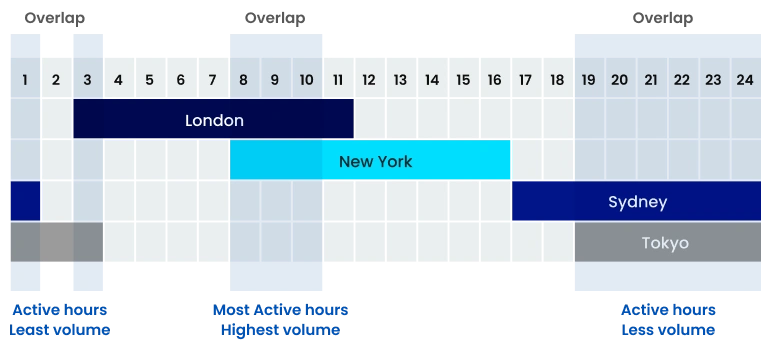 Figure 1: Forex trading session overlaps
Forex Market Trading Hours
The forex market operates continuously 24 hours a day across major financial centers globally, segmented into three primary trading sessions: Asian (Tokyo), European (London), and North American (New York).
The highest forex market activity occurs during session overlaps, especially between London and New York, providing enhanced liquidity and volatility for traders. Forex traders take advantage of these optimal trading hours:
Tokyo Session Forex Hours: 7 PM to 4 AM EST
London Session Forex Hours: 3 AM to 12 PM EST
New York Session Hours: 8 AM to 5 PM EST
For new forex day traders, the overlaps between these sessions often present the most favorable trading conditions:
The London/New York overlap (8 AM to 12 PM EST) generally offers the highest volatility and liquidity.
The Tokyo/London overlap (3 AM to 4 AM EST) can provide unique trading opportunities for specific currency pairs.
Selecting the Best Currency Pairs for Intraday Trading
In forex day trading, a currency pair represents the exchange rate between two currencies, where one currency is bought and the other sold. Price fluctuations in these pairs generate trading opportunities. Choosing the right pairs is crucial when developing forex day trading strategies:
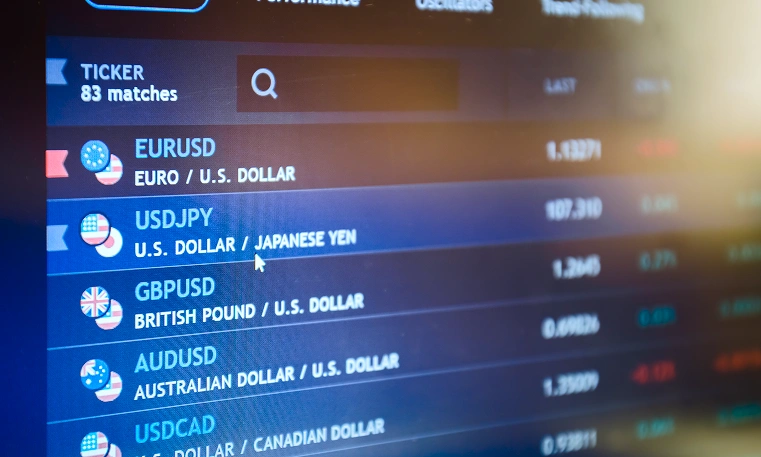
Figure 2: Forex currency pairs
Major Currency Pairs
Major pairs typically feature the tightest spreads and highest liquidity, making them ideal for beginner day trading strategies:
EUR/USD (Euro/US Dollar)
GBP/USD (British Pound/US Dollar)
USD/JPY (US Dollar/Japanese Yen)
USD/CHF (US Dollar/Swiss Franc)
Cross Currency Pairs
Cross pairs (those excluding USD) can offer additional trading opportunities but generally have wider spreads:
EUR/GBP (Euro/British Pound)
EUR/JPY (Euro/Japanese Yen)
GBP/JPY (British Pound/Japanese Yen)
Exotic Currency Pairs
Beginner day trading strategies typically avoid exotic pairs due to higher spreads and lower liquidity:
USD/TRY (US Dollar/Turkish Lira)
USD/ZAR (US Dollar/South African Rand)
Forex Day Trading Strategies

Moving Average Crossover Strategy
One of the simplest day trading strategies used in forex trading, the moving average crossover identifies potential trend changes. A buy signal occurs when a fast EMA (8-period) crosses above a slow EMA (21-period), while a sell signal is generated when the fast EMA crosses below the slow EMA.
Apply 8 and 21-period EMAs on a 15-minute chart, enter long positions when the fast EMA crosses above the slow EMA, and set stop-loss orders below recent swing lows. Take profits at a 1:2 risk-reward ratio or when EMAs cross again.
Support and Resistance Trading
Support and resistance levels offer structured entry and exit points. Support is a price level where downward momentum pauses due to buying interest, while resistance is where upward momentum slows due to selling pressure. This particular strategy is exceptionally popular amongst scalper in forex trading discipline.
Identify key support and resistance levels on daily charts, then monitor price action on 5- or 15-minute charts for confirmation. Enter long trades at support and short trades at resistance, confirming with candlestick patterns. Place stop-loss orders beyond these levels to manage risk.
Breakout Trading Strategy
Breakout trading targets price moves following a breakout from consolidation patterns such as triangles, rectangles, or flags. Traders watch volume for confirmation and enter trades when price breaks support or resistance with rising volume.
Stop-loss orders are placed within the pattern, and take-profit targets equal the pattern’s height, enabling traders to capitalize on momentum.
Fibonacci Retracement Strategy
Fibonacci Retracement levels help identify potential trend reversal zones. This strategy involves drawing retracements from swing lows to highs (in uptrends) or highs to lows (in downtrends) and observing price reactions at key levels such as 38.2%, 50%, and 61.8%.
Confirm trades with candlestick patterns or additional indicators, placing stop-losses beyond the next Fibonacci level. Mastery of this method adds a valuable tool to day trading strategies.
RSI Divergence Strategy
RSI divergence helps identify potential trend reversals. Bearish divergence occurs when price makes higher highs but RSI forms lower highs, signaling a possible downtrend.
Bullish divergence happens when price makes lower lows but RSI forms higher lows, indicating a potential uptrend. Confirm trades with candlestick patterns or other indicators, placing stop-losses beyond recent swing points. This advanced technique is suitable once basic strategies are mastered.
Order Flow Trading
Order flow trading analyzes the balance between buying and selling pressure. Traders examine time and sales data to detect large institutional orders and monitor limit order books where available. Trades are entered when order imbalances align with absorption of buying or selling pressure.
While requiring deeper market understanding, this method can enhance your day trading strategies after mastering fundamental techniques.
Each strategy offers a structured framework, aiding traders in refining skills and establishing disciplined, risk-managed approaches.
Forex Day Trading Technical Analysis
Which technical analysis tools should forex day traders prioritize?

Figure 3: Forex technical analysis tools
How to Interpret Forex Charts
Different chart types serve distinct roles:
Candlestick charts illustrate market sentiment visually and are favored in most beginner day trading strategies due to their detailed price action representation
Bar charts offer similar insights in a more compact format
Line charts simplify price movements and assist in identifying overall trends
Renko charts filter out market noise by focusing solely on price movement
Optimal Timeframes for Forex Day Trading
Selecting the right timeframe is vital for maximum trading volume to avoid slippage and gap risk. Timeframes represent price data over specific intervals such as 1, 5, or 15 minutes, aiding traders in analyzing trends and making informed decisions.
1-minute charts: Suitable for scalping but prone to noise
5-minute charts: Widely used for most intraday trading strategies
15-minute charts: Provide clearer signals with reduced noise
30-minute and 1-hour charts: Commonly used for confirming trade bias in beginner day trading strategies
Recommended Indicators for Forex Day Trading
Technical indicators are quantitative tools based on price, volume, or open interest that assist traders in identifying market trends, entry and exit points, and making informed decisions. ,
Effective forex day trading strategies integrate various indicators:
Trend Indicators
Moving Averages: Simple Moving Averages (SMA) and Exponential Moving Averages (EMA) help determine trend direction
MACD (Moving Average Convergence Divergence): Indicates momentum shifts
Parabolic SAR: Identifies potential trend reversals
Momentum Indicators
RSI (Relative Strength Index): Detects overbought and oversold conditions
Stochastic Oscillator: Compares closing price relative to price range over a set period
CCI (Commodity Channel Index): Identifies cyclical price trends
Volatility Indicators
Bollinger Bands: Measure market volatility and potential price targets
ATR (Average True Range): Quantifies market volatility
Keltner Channels: Similar to Bollinger Bands but based on ATR for band calculation
Risk Management in Forex Day Trading

Figure 4: Risk gauge meter illustrating risk levels
Position Sizing
Accurate position sizing is essential for effective risk management. It determines the appropriate trade volume based on account size, risk tolerance, and stop-loss distance.
The 1% risk rule is advised for beginners:
Never risk more than 1% of your trading capital on a single trade
Calculate position size as: Position Size = (Account Size × Risk Percentage) ÷ Stop-Loss in pips
Stop-Loss Placement
Effective stop-loss placement is critical in any form of trading. Stop-loss orders automatically close trades at predefined price levels to limit losses and control risk.
Volatility-based stops: Set stops using an ATR multiplier (e.g., 1.5× ATR)×
Structure-based stops: Place stops beyond key support/resistance or swing points
Time-based stops: Exit trades that do not move favorably within a set timeframe'
Beginner day trading strategies should always define stop-loss levels prior to trade entry.
Take-Profit Strategies
Clear profit-taking rules is the first thing that any trader must develop in any form of trading:
Fixed risk-reward: Set take-profit targets at multiples of risk (e.g., 1:2, 1:3)
Technical levels: Take profits at established support/resistance zones
Partial profit-taking: Scale out of positions incrementally at various levels
Trailing stops: Adjust stop-loss orders to lock in profits as the trade moves favorably
Psychological Factors in Forex Day Trading
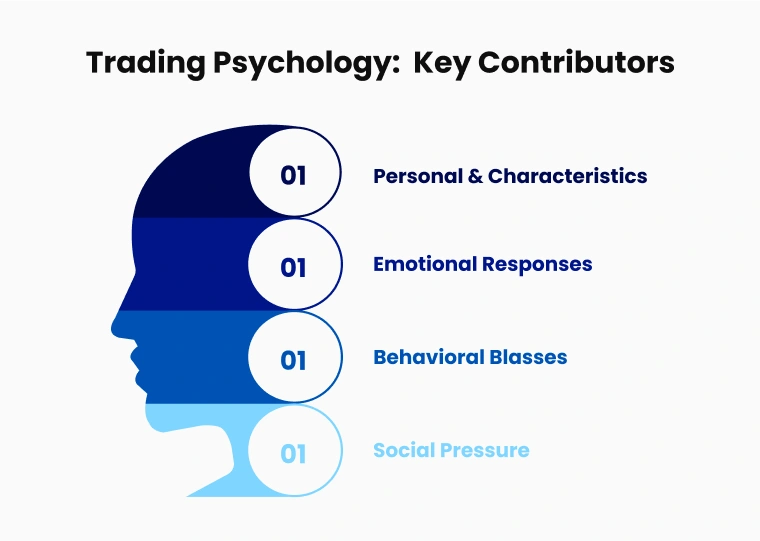
Figure 5: Psychology in forex trading
Maintaining Discipline
Mental discipline underpins successful day trading. Beginners should develop methods to manage psychological challenges, including adhering strictly to a trading plan, respecting risk limits, and avoiding revenge trading after losses.
Taking regular breaks supports mental clarity, while maintaining a detailed trading journal enables objective performance analysis and strategy refinement.
Handling Losses
Losses are an inherent part of forex trading; cultivating a constructive mindset toward them is vital for long-term success.
Traders should accept losses as normal, objectively analyze losing trades for improvement, and maintain consistent position sizing regardless of recent outcomes. Implementing stop-trading rules after consecutive losses can prevent emotional decisions, while focusing on execution over short-term results promotes steady progress.
How to start Day Trading in Forex for Beginners
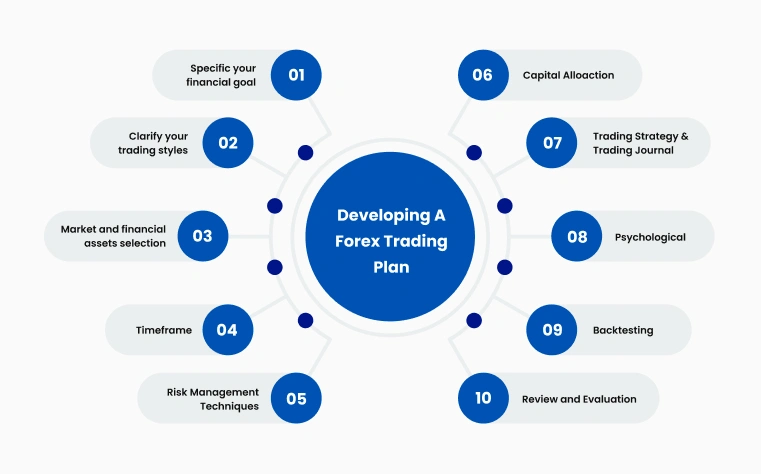
Figure 6: Forex trading plan
Getting started in forex day trading means setting up the right account before applying any of the strategies covered later in this guide.
- Choose a broker with Tier 1 regulation, tight raw spreads, and low-latency execution — spread cost compounds quickly across the volume of trades a forex day trader places
- Understand lot sizes and leverage before funding an account: a standard lot is 100,000 units of the base currency, and leverage determines how much market exposure your margin controls — higher leverage means larger swings in both directions
- Start on a demo account to test execution speed and get comfortable with pip value calculations before risking capital
- Fund the account with only what you're prepared to risk under the position-sizing rules covered in the Risk Management section below
- Begin with the major currency pairs (EUR/USD, USD/JPY, GBP/USD) — they carry the tightest spreads and highest liquidity, which matters more for a beginner than any specific strategy choice
A comprehensive trading plan is essential for consistent success. Beginners should clearly define trading objectives, timeframes, entry and exit criteria, and risk management protocols. Establishing a trading routine and schedule fosters discipline, while tracking performance metrics supports ongoing strategy optimization.
Before trading with real capital, test strategies under various market conditions. Backtesting with historical data identifies potential performance patterns, and forward testing via demo accounts validates strategies in live environments. Transition to live trading gradually, starting with small positions to manage risk and adapt smoothly.
Maintaining detailed trade records is critical for long-term improvement. Document chart screenshots before entries, record trade parameters (entry, exit, risk, reward), and note market context and rationale. Weekly reviews of these records help identify strengths, weaknesses, and areas for refinement. This disciplined, data-driven approach enhances decision-making and profitability.
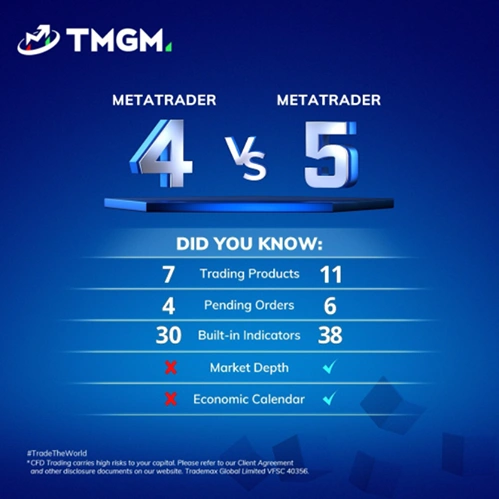
Figure 6: MetaTrader 4 vs MetaTrader 5
Technology Requirements for Forex Day Trading
Successful forex traders all require suitable technology:
Trading Platforms
Popular platforms for beginner day trading strategies include:
MetaTrader 4 (MT4) & Meta Trader 5 (MT5): Industry standards with extensive indicator libraries
cTrader: Advanced platform featuring depth of market tools
TradingView: Superior charting capabilities with social networking features
NinjaTrader: Highly customizable platform with advanced features
Execution Tools
Certain forex day trading strategies benefit from specialized execution tools:
One-click order execution
Automated trade management features (e.g., trailing stops, partial exits)
Risk calculators for precise position sizing
Trade journaling software
Regulatory Considerations
Understanding regulatory framework is crucial for forex day trading strategies:
Beginner day trading strategies should consider broker regulation (e.g., FCA, ASIC, CFTC/NFA)
Understand tax obligations related to frequent trading
Be aware of pattern day trader rules in applicable jurisdictions
Consider account types (individual, corporate, proprietary)
Developing a Learning Path
Mastering day trading in forex requires continuous improvement of your trading plan and psychology tailored to individual risk appetite, market dynamics, and risk controls.'
A stepwise approach begins with mastering one strategy before adding complexity, ensuring a solid foundation. Risk management should focus on capital preservation as a priority for long-term success. As proficiency grows, traders can incorporate advanced techniques while maintaining discipline.
Seeking mentorship or joining trading communities offers valuable insights and feedback, accelerating development. Regularly reviewing and adjusting strategies enables adaptation to changing market conditions and performance improvement.

Figure 7: Forex Technology
The Future of Forex Day Trading
Emerging technologies are transforming forex day trading strategies:
Algorithmic Trading is increasingly accessible to retail traders
Big data analytics provide enhanced market insights
Machine learning applications improve pattern recognition
Social trading and copy trading platforms are gaining popularity among beginner forex day traders
Developing effective forex day trading strategies demands technical expertise, psychological resilience, and practical experience. For newcomers, the journey should start with education, progress through structured practice, and culminate in consistent application of proven methods.
Remember, successful forex day trading strategies emphasize consistency over extraordinary gains. By managing risk prudently, maintaining emotional control, and continuously refining your approach, you can evolve beginner day trading strategies into sophisticated techniques for navigating the complex yet rewarding currency markets.